The Real Truth: Lg Gram Book or Tp Link Deco Be23?
When planning an upgrade or a first big purchase, buyers often face a clear but tricky choice: invest in a new ultraportable laptop or fix the home network so that any device performs better. At first glance, comparing an LG Gram Book — a lightweight, highly portable laptop — with a TP-Link Deco BE23 — a mesh networking system designed to expand and stabilize Wi‑Fi — may seem like an apples-to-oranges decision. In practice, though, the trade-off is practical and common: should a buyer spend limited budget on a device they carry every day, or on infrastructure that improves the experience of every device at home? This article examines both products through real-world use cases, identifies what typical buyers care about, outlines pros and cons, and offers a buying guide to help readers decide.
Introduction: The buyer’s dilemma
Modern digital life depends on two layers: the endpoint (the laptop, tablet, or phone used to get work done) and the network (the Wi‑Fi or wired connection that carries data). A capable laptop with poor internet can feel constrained; a flawless network and an underpowered laptop can leave tasks slow and frustrating. The LG Gram Book and TP‑Link Deco BE23 represent investments in those two layers. Understanding which one will produce the most meaningful improvement depends on the buyer’s daily needs, environment, and priorities.
Product overviews and real-world roles
LG Gram Book — mobility, battery life, and a refined daily driver
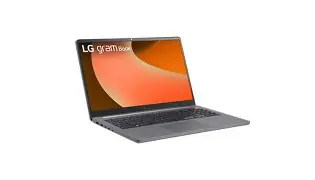
The LG Gram Book line is widely recognized for delivering extremely light laptops with large displays and long battery life. Buyers who prioritize portability — commuters, students, frequent travelers, and hybrid workers — regularly choose Gram models because they minimize shoulder strain without sacrificing screen real estate. In the real world, the Gram is a single-device investment that directly influences productivity during commutes, in cafés, and across office-to-home transitions.
Typical strengths shown in daily use include long battery life that reduces the need for frequent charges, a comfortable keyboard for extended typing sessions, and a slim chassis that fits easily into backpacks. These advantages translate into real minutes saved and less friction during mobile workflows: finishing a document on a long flight, joining back-to-back video calls without hunting for a plug, or carrying a laptop all day across a campus.
TP‑Link Deco BE23 — network reach, stability, and household impact
The TP‑Link Deco BE23 is positioned as a mesh Wi‑Fi solution intended to improve coverage and stability across a home. For many households — especially those in larger or multi‑story homes, those with thick walls, or those using many smart devices — upgrading to a mesh system resolves weak signal spots and connection dropouts. Unlike a laptop purchase that benefits one primary user, a mesh system affects every connected device in the household: laptops, phones, tablets, smart TVs, thermostats, and more.
In everyday scenarios, Deco devices reduce buffering during streaming, stabilize video calls in the kitchen or bedroom, and prevent lag during cloud-based work sessions. Home offices, shared apartments, and families with kids working or studying from home often notice immediate improvements after replacing a single-router setup with a mesh system.
Detailed product analysis
LG Gram Book — what to expect beyond the marketing
Performance in LG Gram lineups varies with configuration, but several consistent traits appear across recent models and generations:
- Featherweight design: The Gram emphasizes low weight through advanced magnesium alloys and design trade-offs that prioritize portability over heavy-duty cooling systems.
- Long battery life: Battery capacity and efficient components usually produce above-average endurance for productivity tasks — an important consideration for those who need all-day untethered use.
- Large displays in a small footprint: Gram models commonly offer 14", 16", or 17" panels with thin bezels, giving more screen area without a correspondingly larger chassis.
- Port selection: Recent models tend to include a reasonable mix of USB‑A, USB‑C, HDMI, and microSD or full-size SD readers, which helps in real-world workflows that require peripherals or external storage.
- Repairability and upgradability: LG historically balanced thinness with some degree of user access for RAM or storage on certain models, but buyers expecting desktop-like upgrade paths should verify the specific configuration before purchase.
Where the Gram can fall short in practice is thermal headroom for sustained heavy workloads. Photo and video editors or users who compile large codebases may find that the Gram prioritizes thinness and battery life over prolonged high-performance thermal designs. Buyers who want a true workstation experience may prefer a heavier laptop with better cooling.
TP‑Link Deco BE23 — practical expectations and limitations
Mesh systems, including the Deco BE23, deliver benefits that are largely situational. Important points when evaluating a Deco mesh for real-world use:
Shop the latest Laptops & Computers picks on Amazon.
View Offers →- Coverage improvement: Mesh nodes reduce dead zones by amplifying or relaying Wi‑Fi signals through multiple access points. The practical result is stronger signal in rooms far from the ISP gateway.
- Simplified setup and management: TP‑Link’s Deco app typically provides guided setup, easy firmware updates, and basic network controls (QoS, parental controls, device grouping) — convenient for non-technical buyers.
- Aggregate household benefit: Because the mesh improves Wi‑Fi for all devices, the perceived value per household member can be high, especially when multiple users are simultaneously video conferencing or streaming.
- Constraints: Mesh nodes still depend on the ISP’s incoming bandwidth. They can’t increase the raw internet speed beyond what the ISP provides, and poorly placed nodes or interference can reduce expected gains.
Buyers should also consider wiring options. Homes with Ethernet runs can use wired backhaul between nodes for optimal throughput. In contrast, purely wireless backhaul reduces peak performance, which matters for high-bandwidth tasks like 4K streaming or competitive gaming.
Pros & cons
LG Gram Book — pros & cons
- Pros:
- Exceptional portability and one-hand liftability
- Long battery life for extended mobile work
- Large, high‑quality displays in compact frames
- Good selection of ports for daily tasks
- Cons:
- Thin-and-light design means limited sustained thermal performance
- Premium price for top configurations
- Not the ideal choice for heavy content creation that requires a high‑TDP GPU
- Repairability and component upgrade paths vary by model
TP‑Link Deco BE23 — pros & cons
- Pros:
- Improves Wi‑Fi coverage across multiple rooms
- Benefits every device in the household simultaneously
- Usually easy to set up and manage via a mobile app
- Small hardware footprint and flexible placement
- Cons:
- Can’t increase ISP-provided bandwidth
- Performance depends on node placement and environmental interference
- Wireless backhaul may limit peak throughput compared with wired backhaul
- Some advanced network features may be limited compared with higher-end business routers
Comparison table: LG Gram Book vs TP‑Link Deco BE23
| Aspect | LG Gram Book | TP‑Link Deco BE23 |
|---|---|---|
| Primary purpose | Personal computing (portable laptop for productivity) | Home networking (mesh system to improve Wi‑Fi coverage) |
| Who benefits most | Single user who values mobility and battery life | Multiple-device households and people with Wi‑Fi dead zones |
| Immediate impact | Improves personal productivity and mobility | Improves connection quality and consistency for all devices |
| Setup & installation | Out-of-box ready; basic software setup for OS | Requires placement planning; app-guided setup |
| Upgrade cycle | Replaced every few years depending on performance needs | Longer useful life, but firmware support matters |
| Cost-to-benefit (typical) | High benefit for individuals who travel or commute | High household ROI when home network is the bottleneck |
| When to choose | Frequent mobile work, on-device performance bottleneck | Multiple users, weak Wi‑Fi areas, streaming/remote work interruptions |
Buying guide — how to decide
To choose between investing in an LG Gram Book or a TP‑Link Deco BE23, answer these practical questions based on real-world behavior and priorities:
1. Where does the pain originate: device or network?
If tasks feel slow when the laptop is otherwise idle — opening apps is sluggish, local file work is slow, or battery life is insufficient — the endpoint (the laptop) is the likely bottleneck. If web pages load slowly on multiple devices, video calls degrade when moving between rooms, or there are dead spots in the house, the network is the probable culprit.
2. How many people and devices share the connection?
A single user who mostly works in cafés and needs an ultraportable will benefit more from a Gram. A family or shared apartment with multiple simultaneous users (video calls, streaming, remote classes) will likely see greater day-to-day improvement from a mesh system.
3. What is the buyer’s mobility requirement?
Frequent travel, campus life, coffee shop work sessions, and commuting favor the Gram. If most work is done from a single desk at home, the laptop’s portability is less critical, and network improvements could unlock better productivity for everyone.
4. Does the home layout require mesh?
Measure or estimate the square footage, construction type (thick walls, metal studs), and router placement. If the ISP gateway sits at one end of the house and the home office is far away, a mesh node near the office can dramatically reduce packet loss and latency for remote work calls.
5. Budget allocation and long-term value
Think beyond the sticker price. A laptop tends to be a personal productivity tool with a replacement cycle of a few years; a mesh system is infrastructure that may deliver multi‑user benefits for a longer period. For constrained budgets, assess which purchase delivers the greatest reduction in daily friction.

6. Hybrid approach and timing
It is not always an either/or decision. In many practical cases, a phased approach makes sense: prioritize the most acute problem now and plan the other upgrade later. For instance, someone with a dying laptop but acceptable Wi‑Fi should replace the laptop now and revisit mesh later. Conversely, a household with poor Wi‑Fi that hurts everyone's work might install mesh first and delay a premium laptop purchase.
Discover deals on Laptops & Computers — updated daily.
View Offers →Real-world scenarios and recommended choices
Scenario A: The remote worker who joins calls from every room
If video call stability fluctuates depending on the room, the Deco BE23 will change the daily experience for the better immediately. A mesh node near the home office or bedroom ensures consistent bandwidth and lower packet loss, directly reducing the number of interrupted meetings.
Scenario B: The student who needs portability and long battery life
A lightweight LG Gram Book aligns with campus life — between lecture halls, libraries, and study groups. The Gram improves day-to-day productivity, reduces the need to find power outlets, and makes carrying the laptop comfortable all day.
Scenario C: The household with many smart devices and 4K streaming
When multiple devices stream or interact simultaneously, a mesh system is usually the better early investment. Stabilizing the network often eliminates buffering and improves responsiveness for smart home devices, streaming media players, and cloud-based gaming.
Scenario D: The content creator editing large files at home
If the primary need is local compute power — video editing, 3D rendering — a laptop with higher thermal and GPU capability than a thin-and-light Gram may be necessary. If the creator collaborates remotely and regularly transfers large files across the network, a combined approach (powerful machine plus reliable home network) will be ideal, though budgets may force prioritization.
Practical tips before purchase
- Test the problem: Use simple diagnostics. Check web speeds on multiple devices; observe whether issues follow the device or the room.
- Try relocation: Temporarily moving a laptop or router can reveal whether simple placement changes fix the issue before spending money.
- Confirm specs and warranty: For laptops, verify the exact configuration (CPU, RAM, storage) and warranty terms. For mesh systems, check firmware update policies and security features.
- Consider wired backhaul: If home wiring exists, wired connections between mesh nodes provide better, more consistent performance than wireless backhaul alone.
- Plan forward: Think about how usage will evolve. A growing household or more remote work implies network needs will increase; heavy creative workloads may demand a more powerful laptop sooner.
Conclusion
Choosing between an LG Gram Book and a TP‑Link Deco BE23 is less about which product is objectively “better” and more about which investment resolves the most acute daily pain. The LG Gram Book is an outstanding choice for anyone who values mobility, long battery life, and a lightweight footprint — it improves one person’s productivity wherever they go. The TP‑Link Deco BE23, by contrast, is an infrastructure purchase: it lifts the performance of every device in the home and delivers noticeable benefits for families, shared households, and anyone suffering from spotty Wi‑Fi.
Practical buyers should diagnose whether their bottleneck is the endpoint or the network, consider who and what devices share the connection, and prioritize the purchase that produces the highest reduction in daily friction. When budgets allow, both upgrades complement each other: a reliable network plus a capable laptop yields the smoothest, least stressful digital experience.